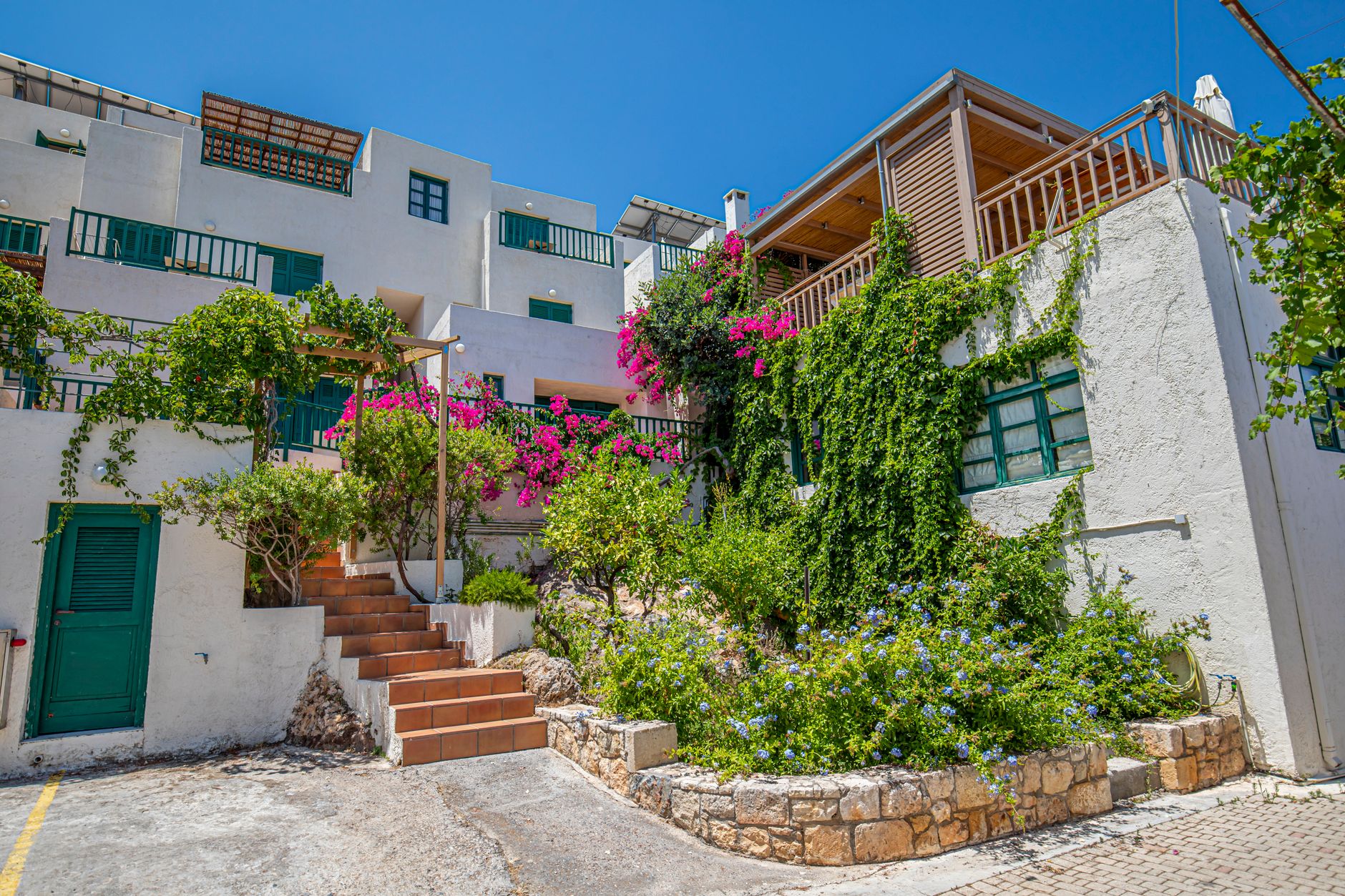
You are a French tax resident and you own a rental property in Crete? Two tax authorities have a claim on your rental income: the Greek Tax Authority (AADE) and the French tax administration (DGFIP). This guide explains your obligations on both sides, how the double taxation relief mechanism works, and the most common mistakes French expat landlords make.
Rental Income from Greece: Are You Taxable in France?
Tax Residency Principle: Where Do You Declare?
France taxes its tax residents on their worldwide income — this is the principle of global taxation set out in Article 4A of the French General Tax Code (Code Général des Impôts). If you meet any of the French tax residency criteria (habitual home, principal place of stay, main professional activity, or centre of economic interests in France), you are required to declare your Greek rental income to the French tax authorities, even if you are already paying taxes in Greece.
Foreign-Source Income: French Rules
Rental income earned in Greece qualifies as foreign-source income in France. It must be reported on Form 2047 (Declaration of Income Received Abroad), then incorporated into your global income on Form 2042. The France-Greece tax treaty of 1963 then provides a tax credit mechanism to prevent you from being taxed twice on the same income. Declaring is not the same as double taxation — that is the essential distinction to understand.
Greek Taxation: How Rental Income Is Taxed in Greece
Greece taxes rental income under a specific progressive scale, separate from the one applied to employment income. This scale applies both to Greek residents and to non-resident property owners collecting rents on Greek territory.
Greek Tax Rates on Rental Income (15% to 45%)
| Annual Rental Income Bracket | Tax Rate |
|---|---|
| €0 – €12,000 | 15% |
| €12,001 – €24,000 | 25% |
| €24,001 – €35,000 | 35% |
| Above €35,000 | 45% |
Gross vs Net Income Basis
Greece taxes rental income on a gross basis by default. There is no automatic flat-rate deduction equivalent to the French micro-foncier regime. Expenses are only deductible if they represent actual, documented costs directly related to the property. This makes rigorous record-keeping essential from the first euro of rent received.
Deductible Expenses (ENFIA, Management Fees, Maintenance)
Several categories of expenses can be deducted from gross rental income to reduce the taxable base in Greece:
- ENFIA (annual property tax), calculated at approximately 0.28% of the property's objective value
- Condominium/building management fees (syndic)
- Maintenance, repairs and routine upkeep costs
- Professional property management fees
- Loan interest in certain specific cases
For a full breakdown of how ENFIA is calculated and its 2026 rates, see our dedicated article on ENFIA property tax in Crete 2026.
Declaring Greek Rental Income in France
Once your Greek tax obligations are settled, the French declaration remains mandatory. This is the stage where most expat landlords make mistakes — either by omitting the correct forms or misunderstanding which tax regime applies to their situation.
Required Forms and Deadlines
- Form 2047 — Declaration of income received abroad: state the source country (Greece), the nature of the income (property income or BIC), and the gross amount received. This form is the gateway to obtaining the foreign tax credit.
- Form 2044 or 2044-SPE — Property income declaration (real expense regime): required if you opt to deduct actual expenses rather than applying a flat-rate allowance.
- Form 2042 — Main declaration: the net income figure calculated above is reported here in the box dedicated to foreign-source income.
Deadlines follow the standard French annual filing calendar (typically May-June), with specific dates depending on your place of residence. If you reside in mainland France, standard deadlines apply regardless of where the income was generated.
Property Income: Flat-Rate vs Real Expense Regime
- Micro-foncier (flat-rate regime): available if your total property income (France and abroad combined) does not exceed €15,000 per year. A 30% flat-rate deduction is applied automatically, with no supporting documentation required. Simple, but often less advantageous when actual Greek expenses are significant.
- Régime réel (real expense regime): mandatory above €15,000, or available on election below that threshold. You deduct actual expenses (ENFIA, management fees, loan interest, works). Generally the optimal regime for Greek rental properties with documented costs.
Professional Income (Active Short-Term Rental via Airbnb)
If you rent your property regularly on a furnished, short-term basis through platforms such as Airbnb, France classifies this income as BIC (Industrial and Commercial Profits) rather than property income. The micro-BIC regime offers a 50% flat-rate deduction on revenues up to €77,700, or 71% for classified furnished tourist accommodation. Above those thresholds, or on election, the real BIC regime requires separate bookkeeping and may trigger social contribution obligations.
Avoiding Double Taxation: The France-Greece Tax Treaty
The France-Greece tax convention of 21 August 1963 explicitly addresses the cross-border taxation of real estate income. Its central mechanism is the tax credit — not full exemption.
Tax Credit for Foreign Taxes Paid
The treaty grants Greece the primary right to tax rental income from property located on its territory. France then taxes the same income as part of the taxpayer's global income, but grants a tax credit equal to the Greek tax actually paid — capped at the French tax corresponding to those same revenues. The Greek tax paid is therefore offset against French tax owed, not added on top of it.
How the Offset Mechanism Works in Practice
Simplified example: you pay €1,200 in Greek income tax on your rental revenues. France calculates its own tax on those same revenues: say €1,800. You apply the €1,200 tax credit against the French €1,800, leaving only €600 to pay in France. Total tax burden is €1,800 — the same as if you had only paid in France. If Greek tax exceeds the theoretical French tax on those revenues, the excess is not refunded. To benefit from this mechanism, you must attach proof of Greek tax payment to your French return (official AADE tax assessment, bank transfer evidence).
Airbnb vs Long-Term Rental: Key Tax Differences
Whether you rent short-term via a platform or under a standard residential lease determines the applicable tax regime on both sides. This is not a minor distinction — it affects your deductible expenses, filing obligations, and overall tax burden.
Professional Activity vs Property Income
In Greece, short-term rental activity has been regulated by Law 5170/2025: any rental via a platform (Airbnb, Booking.com, etc.) now requires a valid AMA licence (Short-Term Rental Authorisation). Operating without this licence is illegal and exposes landlords to significant fines. On the tax side, these revenues fall under the same progressive scale as standard rental income, but can shift to a business income classification if activity exceeds certain thresholds or includes ancillary hotel-type services.
For everything you need to know about the AMA licence, see our guide AMA licence Greece 2026. The specific costs applicable to short-term rentals in Crete are detailed in our article on Airbnb expenses in Crete.
Accounting and Filing Obligations by Rental Type
- Long-term rental (unfurnished lease): French property income forms (2044 + 2042), retain leases and rent receipts, no VAT obligation.
- Furnished short-term rental (Airbnb): BIC declaration in France, income ledger, retain platform statements and expense invoices. AMA licence mandatory in Greece. Greek VAT may apply above the applicable revenue threshold.
- In all cases: retain Greek tax assessment notices for at least 6 years to justify the foreign tax credit with the French DGFIP.
Common Pitfalls and Legal Optimisations
Mistakes French Expats Frequently Make
- Failing to declare Greek rental income in France, assuming that paying Greek tax settles all obligations.
- Omitting Form 2047, which invalidates the right to the foreign tax credit and exposes to reassessment.
- Operating short-term rentals without a valid AMA licence since Law 5170/2025 came into force.
- Defaulting to the micro-foncier flat-rate regime without checking whether the real expense regime would be more advantageous given actual Greek deductible costs.
- Keeping insufficient documentation to prove foreign taxes paid.
Legal Structuring Options (SCI, Greek Company, VAT)
Depending on the scale of your rental activity and your wealth management objectives, different legal structures are available:
- Direct personal ownership: the simplest option for a single property — straightforward declarations in both France and Greece, but no personal asset protection.
- French SCI (civil property company): useful for family management or estate planning, but a French SCI owning property in Greece remains subject to Greek taxation locally — fiscal transparency does not suppress the Greek filing obligation.
- Greek IKE (private company): suited to larger portfolios or professional rental management. Requires full Greek bookkeeping, annual accounts filing, and VAT if revenues exceed the applicable threshold.
Note on VAT: short-term rentals in Greece may be subject to VAT above a certain annual revenue threshold, at a reduced rate applicable to tourist accommodation. Below that threshold, the VAT exemption may apply. This needs to be assessed case by case with a Greek accountant.
Documents to Retain
- Annual Greek tax assessment notices (AADE forms E1 and E2)
- Proof of Greek tax payment (bank transfer confirmation or official tax receipt)
- Invoices for deductible expenses (ENFIA, management fees, maintenance, repairs)
- Complete platform revenue statements (Airbnb, Booking.com)
- Residential lease agreements for long-term rentals
- Valid and up-to-date AMA licence
- Any correspondence with the Greek tax authority (AADE)
Worked Examples and Concrete Scenarios
Tax Calculation: French Owner in Eastern Crete
Consider a French tax resident owning a 70 m² apartment in Elounda, purchased for €168,000 (€2,400/m², within the Eastern Crete market range of €1,500–€2,500/m²). The property is rented short-term for 85 nights per year at an average rate of €110 per night (within the market range of €80–€140 observed for the area).
| Item | Amount |
|---|---|
| Gross annual rental income (85 nights × €110) | €9,350 |
| ENFIA (0.28% × €168,000) | − €470 |
| Property management fees (15% of revenue) | − €1,403 |
| Annual maintenance and charges | − €500 |
| Net taxable income in Greece | €6,977 |
| Greek income tax (15% × €6,977) | €1,047 |
| Tax credit applicable in France | €1,047 |
In France, this net income of €6,977 is added to the taxpayer's global income. At a marginal tax rate of 30%, the theoretical French tax would be €2,093. After applying the tax credit of €1,047, the additional French tax liability is €1,046. Total tax burden (Greece + France) amounts to €2,093 — an effective rate of approximately 22.4% on net income. Without the tax treaty, the bill would have been €3,140.
The Impact of Deductible Expenses
In this example, deducting actual Greek expenses (ENFIA + management + maintenance, totalling €2,373) reduced the taxable base from €9,350 to €6,977, saving €356 in Greek tax. In France, these expenses — already deducted in Greece — cannot be deducted a second time. The declared Greek net income figure is used as the French tax base. This is precisely why maximising deductions in Greece first makes structural sense, particularly since the Greek rate on lower income brackets (15%) can be lower than the French marginal rate applicable to the same income.
For a deeper analysis of rental yield potential in Crete, see our article Investing in Crete 2026: returns and outlook. If you are still exploring the practicalities of living and owning property in Crete, our expat guide to living in Crete covers the key ground.
These figures are for illustrative purposes only. Each landlord's tax situation is individual and depends on multiple factors including total global income, actual tax residency status, and legal structure chosen. Consult a qualified Franco-Greek tax adviser or accountant before making any investment or filing decision.
Sources
- France-Greece Tax Convention of 21 August 1963, as amended
- French General Tax Code (CGI) — Articles 4A, 156 bis and 197C
- Greek Income Tax Code (KΦE) — Law 4172/2013
- Greek Law 5170/2025 — Short-term rental regulation and AMA licences
- DGFIP (French Tax Authority) — Explanatory notes to Form 2047
- Greek Tax Authority (AADE) — aade.gr — Rental income tax scale 2024-2025
Related articles
Buy a House in Crete: Prices, Steps and Tips 2026
Buy a house in Crete in 2026: prices by zone, notarial steps, Greek taxes, real costs and advice from an English-speaking team in Ierapetra.
ReadGuideBuying in Crete from France: The 2026 Power of Attorney Guide
100% remote purchase via special power of attorney. AFM, due diligence, topographiko, notarial deed, registry: steps, costs and pitfalls in 2026.
ReadTax & LegalCrete Tourist Tax 2026 and Rental Income Tax: Full Rates
Crete tourist tax 2026, rental income tax in 4 brackets (law 5246/2025), ENFIA: everything a property owner must file. With exact rates and deadlines.
ReadNeed personalized guidance?
We'll prepare a tailored estimate for your investment project in Crete.
Book a discovery callReady to take action?
Let's talk about your project
15 minutes, no commitment. We listen to your project and tell you exactly how we can help.