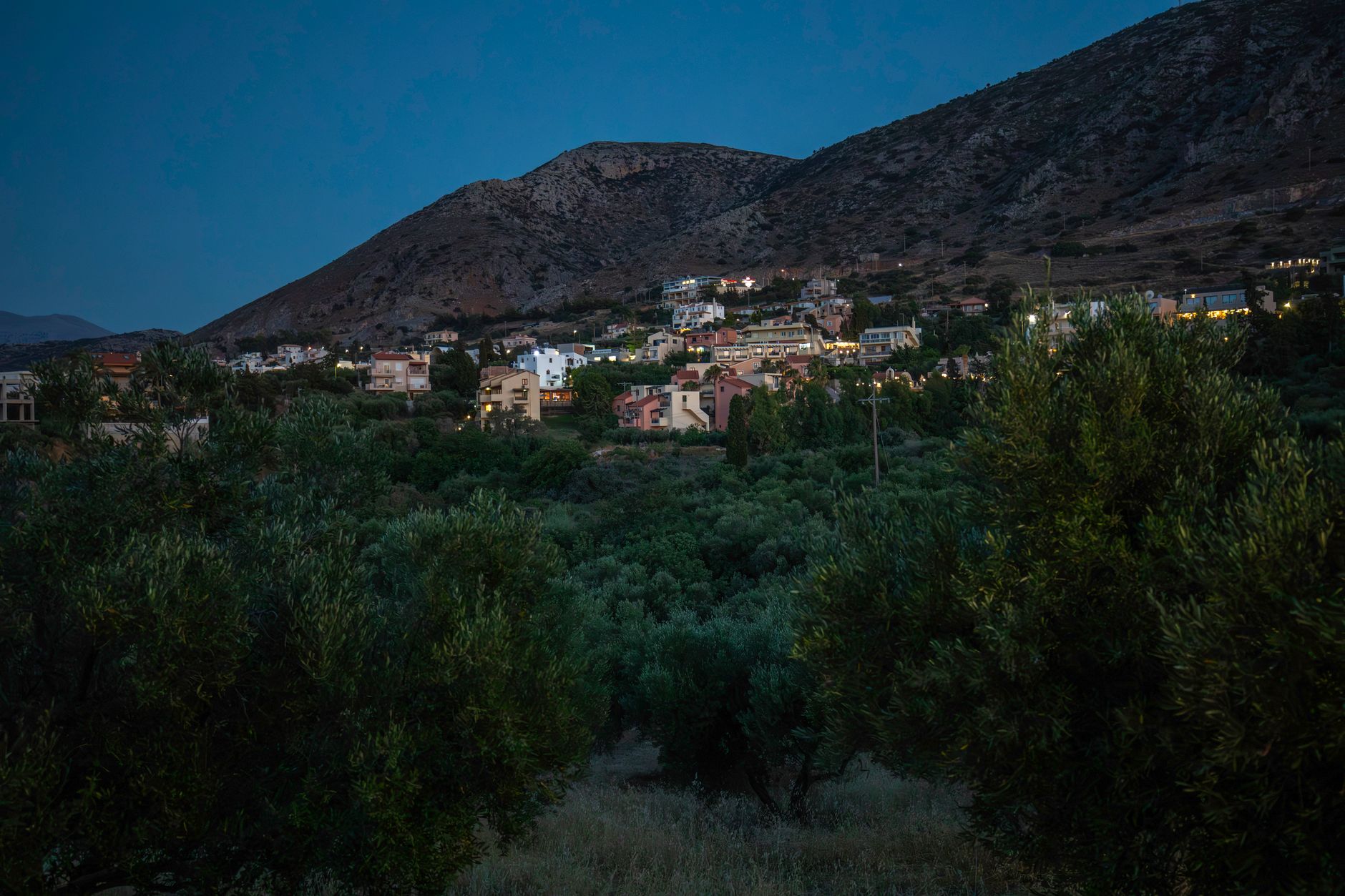
Managing a 1–3 bedroom Airbnb in eastern Crete with over 60% occupancy requires on-the-ground operations you cannot run from abroad. Recruiting a cleaning agent is typically the first structural operational decision — and one of the most legally regulated. Here is what you need to know before posting a listing or signing a contract.
Why a Cleaning Agent Is Essential for a Profitable Airbnb in Crete
During peak season (June–September), an active Airbnb in eastern Crete generates 15 to 25 guest turnovers per month. At an average ADR of €80–140 per night depending on the season, every negative review about cleanliness or availability translates directly into lost bookings. A competent cleaning agent is not an overhead line — it is operational infrastructure.
Availability and Calendar Management
Late check-ins, delayed check-outs, back-to-back cleans with two hours between reservations: managing an active Airbnb property requires on-the-ground availability you cannot provide from abroad or from 45 minutes down the road. A local cleaning agent with extended-hours availability absorbs these operational constraints without friction and without impact on guest ratings.
Languages and Guest Communication
The majority of guests visiting eastern Crete are English-speaking, German, or Scandinavian. A cleaning agent who can interact directly with guests — even in functional English — resolves minor incidents before they become 3-star reviews. Language capability is a selection criterion that is consistently underweighted during recruitment.
Impact on Ratings and Guest Satisfaction
Airbnb and Booking.com ranking algorithms weight cleanliness scores heavily. A property with a cleanliness rating above 4.8 typically generates 20–30% more bookings than one rated at 4.3. This is mechanical and measurable — it shows up directly in occupancy rates and revenue.
Greek Legal Requirements: Declaration, Contract, and Insurance
Greece enforces strict labor regulations for domestic workers and the hospitality sector. Ignorance is not a valid defense before the AADE (Greek tax authority) or EFKA (Greek social security). Since Law 5170/2025, inspections in the short-term rental sector have intensified.
Mandatory Declaration with AADE
All employers in Greece must declare employees to the AADE via the ERGANI system before the first day of work. Failure to declare is classified as undeclared labor, subject to a minimum fine of €1,500 to €3,000 per employee, doubled for repeat offenses. For non-resident property owners, this requires a Greek tax number (AFM) and, in almost all cases, the involvement of a local accountant.
Employment Contract and Key Clauses
The contract must specify: the exact nature of the work (cleaning, guest welcome, property inspection), working hours or intervention modalities, gross compensation, and duration (open-ended or seasonal fixed-term). In Crete, seasonal contracts of 6–8 months (April through October) are standard in tourism. A poorly drafted contract — or the absence of a written contract — exposes the property owner to judicial reclassification and 3-year retroactive contribution recovery.
Social Contributions: Calculation and Rates
Social contributions in Greece represent approximately 25% of gross salary borne by the employer, plus employee contributions (~14%). On a net salary of €700/month, total employer cost is approximately €850–900/month, before mandatory bonuses (13th-month payment in December, proportional for fixed-term contracts). These contributions are declared and paid monthly to EFKA. For a comprehensive view of costs linked to your rental, see our Crete Airbnb costs guide.
Civil Liability and Workplace Accident Insurance
Workplace accident insurance is mandatory from the first employee. In the event of an accident on your property without valid coverage, the property owner's personal civil liability is directly engaged. Standard home insurance policies generally do not cover employees. Local insurers offer specific contracts for tourism domestic workers starting at €150–250/year — the lowest-cost item on the list, and the one most frequently omitted.
How to Recruit a Competent Cleaning Agent Locally
The labor market in eastern Crete (Agios Nikolaos, Sitia, Elounda) is seasonal and competitive from May through September. Good profiles are taken by March. Starting recruitment in February is essential to avoid settling for a default candidate.
Where to Recruit in Crete
- Local property owner networks and expat Facebook groups active in Crete
- Local tourism placement agencies — often more reliable for verified, referenced profiles
- Word of mouth through real estate agencies and local property managers in eastern Crete
- Greek job listing sites (e-job.gr, kariera.gr) to reach actively searching local candidates
Selection Criteria to Verify
- Prior experience in tourist rental or hospitality — not only private domestic cleaning
- Verifiable references from previous employers in the sector
- Confirmed availability during required hours, including weekends and Greek public holidays
- Functional English for basic guest exchanges
- Driving license — essential in eastern Crete for travel between properties
Initial Training and Quality Standards
An experienced hospitality cleaner is not automatically trained to Airbnb standards. An initial 1–2 day on-site training session is necessary: room-by-room cleaning protocols, check-in/check-out property inspection checklists, handling of forgotten items, basic guest communication. This training represents an indirect cost of €100–200 (time and materials) to factor into your startup budget.
Standard Compensation on the Cretan Market
In 2026, the Greek legal minimum wage is approximately €830/month gross (full-time). For a qualified tourism profile, the market rate is €900–1,100/month gross. For a standard property, a part-time contract — 20 hours/week in low season, 30–35 hours in peak season — is the practical norm. Underpaying relative to the market rate nearly always results in early turnover.
The Real Costs: Salary, Contributions, and Hidden Expenses
The classic mistake among DIY property owners is to budget only the net salary. Total employer cost is significantly higher, and wages are not the only cost line to consider.
Net Salary and Employer Contributions (~25%)
| Cost Item | Estimated Monthly Amount |
|---|---|
| Net salary | €700–850 |
| Employer contributions (~25%) | €175–215 |
| Proportional vacation bonus | €60–80 |
| Total employer cost | €935–1,145 |
Management and Supervision Costs
If you manage from abroad, add: regular coordination overhead (calendar management, supply procurement, incident handling), occasional on-site travel, and quality verification time. Estimated at 2–4 hours per week of your time, this represents a non-negligible opportunity cost that most property owners exclude from their profitability calculations.
Training, Turnover, and Seasonal Instability
Turnover in Crete's tourism cleaning sector is high: recruiting twice in a single season is common. Each recruitment cycle represents 2–4 weeks of process — listings, interviews, onboarding — during which cleaning standards are either degraded or managed in emergency mode. These indirect costs are consistently underestimated in DIY calculations.
Real Impact on Your ADR Profitability
On a property generating €15,000–25,000/year in gross revenue at an ADR of €80–140/night, a cleaning agent cost of €800–1,200/month over 5–6 peak months represents €4,000–7,200 per year — 16 to 29% of gross revenue. To model the precise impact on your net profitability after Greek taxes and charges, use our rental revenue simulator.
DIY Hiring vs. Service Delegation: Comparative Analysis
The choice between managing your own cleaning team and delegating to a full-service provider depends on three factors: available time, acceptable legal risk exposure, and the actual break-even threshold on your property.
Advantages and Risks of Recruiting Yourself
- Advantage: direct control over standards and the day-to-day relationship with the agent
- Advantage: lower apparent cost with no management commission
- Risk: direct exposure to Greek legal obligations (AADE, EFKA, written contract)
- Risk: underestimated management time — recruitment, coordination, incident handling
- Risk: non-declaration = minimum €1,500–3,000 fine plus EFKA contribution penalties
Hidden Costs of Direct Recruitment and Management
Beyond salary and contributions, direct management involves: local accountant for monthly EFKA and AADE filings (€500–1,000/year), mandatory employer insurance (€150–250/year), on-site travel for quality checks, monthly administrative overhead, and the unquantified risk of labor disputes in the event of contract termination. These items commonly add €1,500–2,500 per year to the total cost.
Why Use a Management Service
A full-service property management provider includes operational coordination, cleaning team management, and legal compliance within a transparent 25% commission on rental revenue. No surprises, no administrative overhead on the owner's side, no direct legal exposure. The break-even calculation below shows when this structure becomes the more profitable option.
Break-Even Calculation: When Delegation Becomes Profitable
On a property generating €20,000/year in gross revenue: management commission at 25% = €5,000. DIY total cost (salary + contributions + accountant + insurance + management time) = €6,500–9,000. Theoretical break-even between 18 and 24 months from the start. Beyond that point, delegation is structurally more profitable than direct management.
| Criterion | DIY | Service Delegation |
|---|---|---|
| Estimated annual cost | €6,500–9,000 | €5,000 (25% on €20K) |
| Legal risk | High (direct) | Low (transferred) |
| Owner time | 4–8h/week | < 1h/week |
| Operational stability | Variable | Consistent |
| Break-even | — | 18–24 months |
Legal Pitfalls to Avoid
Greece has been intensifying inspections in the short-term rental sector since Law 5170/2025. Non-resident property owners are a priority target for labor inspections, precisely because geographic distance facilitates administrative oversights. See also our guide on Franco-Greek tax arrangements for 2026 for cross-border implications.
Non-Declaration to Authorities: Real Penalties
Operating without an ERGANI declaration exposes you to a fine of €1,500–3,000 per undeclared employee, multiplied for repeat offenses. In a combined tax audit, unpaid EFKA contribution penalties add 30–100% surcharges on top. Personal owner liability may also be engaged if an incident occurs on the property. For rental income tax implications, see our Crete Airbnb tax guide 2026.
Contract Misclassification: Contractor vs. Employee
Some property owners attempt to bypass obligations by paying the cleaning agent as an independent contractor (Greek freelancer). If the work relationship is regular, exclusive, and directed, the AADE can reclassify it as an employment contract with 3-year retroactive contribution recovery. The reclassification criterion is actual subordination — not contractual labeling. The Greek administration is well-practiced on this point in the tourism sector.
Missing Insurance: Liability in Case of Accident
A cleaning agent who falls on your property without valid workplace accident insurance triggers a direct civil procedure against you as the property owner. Standard home insurance policies generally do not apply to employees. Specific employer insurance is mandatory and costs €150–250/year. It is the lowest-cost item in the entire budget — and the most frequently overlooked.
Overtime and Mandatory Legal Benefits
Greek labor law provides overtime premiums (20% up to the 5th hour, 40% beyond), proportional paid leave entitlements, and a 13th-month bonus (dôron). A contract that underestimates actual working hours creates retroactive assessment risk. For any contract exceeding 6 months, using a Greek labor law specialist — accountant or attorney — is a necessary cost, not an optional one.
The AMA license (short-term rental authorization in Greece) has been mandatory since Law 5170/2025 for any property listed on Airbnb or Booking.com. Without a valid AMA, your property cannot legally operate as a short-term rental — and any employment of a cleaning agent in that context is legally exposed. Check your compliance with our Crete AMA checklist 2026.
Sources
- AADE (Greek Tax Authority) — ERGANI system, employer declaration obligations 2026
- EFKA (Greek Social Security) — Employer and employee contribution schedules 2026
- Greek Law 5170/2025 — Short-term rental standards, AMA licensing and rental obligations
- Eastern Crete Airbnb market data — ADR €80–140/night, occupancy rates for 1–3 bedroom properties
Need personalized guidance?
We'll prepare a tailored estimate for your investment project in Crete.
Book a discovery callReady to take action?
Let's talk about your project
15 minutes, no commitment. We listen to your project and tell you exactly how we can help.