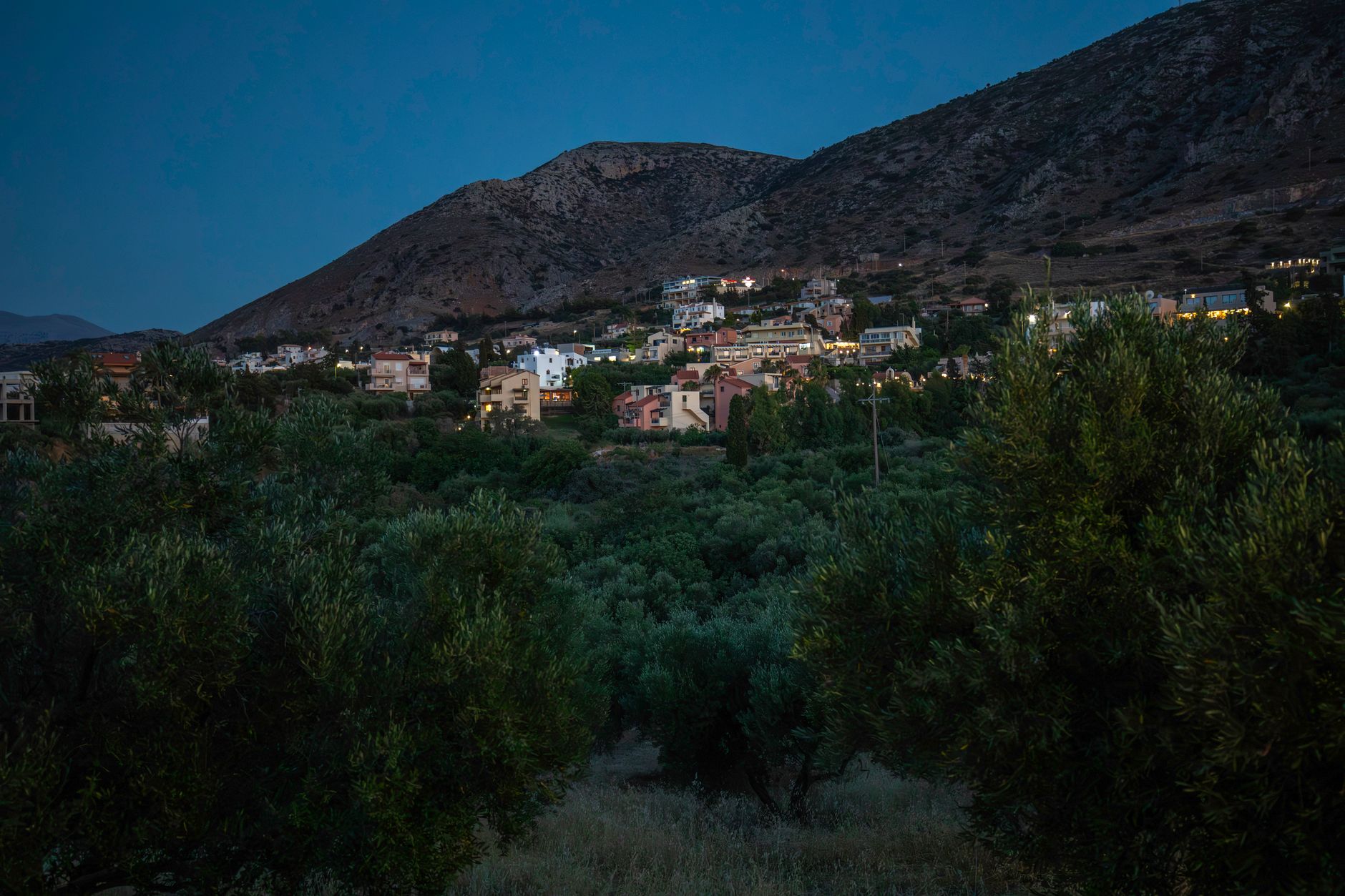
Greek Law 5246/2025 fundamentally reformed rental income taxation in Greece. Effective for 2025 revenues (filed in 2026), it introduces a four-bracket progressive tax scale covering all short-term rental income — Airbnb included. If you own property in Crete, here is what it means for your numbers.
Law 5246/2025: New Tax Framework for Greek Rental Income
Key Changes vs Previous Regime
The previous system applied less uniform rates to short-term rental income. Law 5246 introduces a unified four-bracket progressive scale, similar to standard income tax mechanics. The structural difference: progressivity applies to net income, after deducting documented actual expenses. This changes the optimization equation entirely — rigorous documentation now directly translates into lower taxes.
Who Is Affected: Airbnb Hosts, Short-Term Rentals, Crete Included
The law applies to every property owner earning short-term rental income in Greece — via Airbnb, Booking.com, Vrbo, or direct bookings. This includes Greek residents and foreign non-residents renting out Greek property, including in Crete. Since Law 5170/2025, the AMA license is also mandatory to operate legally. Both laws work in parallel: AMA for operating authorization, Law 5246 for taxation.
2026 Tax Brackets: Complete Scale and Mechanics
| Bracket | Net Annual Income | Tax Rate |
|---|---|---|
| 1st bracket | €0 – €12,000 | 15% |
| 2nd bracket | €12,001 – €24,000 | 25% |
| 3rd bracket | €24,001 – €35,000 | 35% |
| 4th bracket | Over €35,000 | 45% |
The scale is progressive: only the portion of income falling within each bracket is taxed at the corresponding rate. An owner declaring €20,000 net pays 15% on the first €12,000 (€1,800), then 25% on the remaining €8,000 (€2,000) — total €3,800 in taxes. Not €20,000 × 25% = €5,000.
How to Calculate the Tax Base (Net Income – Permitted Deductions)
The taxable base is not your gross Airbnb revenue. It is net income after deducting actual documented expenses. Legally permitted deductions under Greek tax law (AADE) include:
- Furniture and equipment depreciation (legal useful life of 5 years → 20%/year of purchase value)
- Property management fees and platform commissions (Airbnb charges ~3%)
- ENFIA: annual property tax (~0.28% of cadastral value)
- Home and liability insurance premiums
- Loan interest if the property is financed
- Documented maintenance and minor repair costs with invoices
- Co-ownership charges related to rental activity
- Accountant and tax advisor fees
Every deduction must be backed by an official invoice or document. Without documentation, AADE can reject deductions during a tax audit. Administrative rigor is not optional.
Real Example: East Crete Villa, €85/Night, 250 Nights/Year
Gross Annual Revenue Calculation
A typical East Crete villa: 3 bedrooms, pool, Elounda or Makrigialos area. ADR: €85/night (conservative — the market runs €80–€140 depending on season), occupancy: 250 nights/year combining peak (July–August), high (June–September), and shoulder (May–October) seasons. See our [East Crete Airbnb market analysis 2026](/en/blog/marche-airbnb-est-crete-2026-analyse-3122-locations) for sector-level data across 3,122 listings.
| Item | Calculation | Amount |
|---|---|---|
| Nights × ADR | 250 × €85 | €21,250 |
| Gross annual revenue | — | €21,250 |
Actual Deductions (Management, Maintenance, ENFIA, Loan Interest)
| Deductible Expense | Calculation Basis | Estimated Amount |
|---|---|---|
| Property management (15%) | 15% × €21,250 | - €3,188 |
| Airbnb commission (~3%) | 3% × €21,250 | - €638 |
| ENFIA (0.28%, cadastral base €80,000) | €80,000 × 0.0028 | - €224 |
| Home insurance | Annual flat rate | - €400 |
| Maintenance & repairs | With invoices | - €600 |
| Furniture depreciation | 20% × €1,750 furniture value | - €350 |
| Total deductions | — | ≈ - €5,400 |
Net taxable income: €21,250 – €5,400 = €15,850. For a full breakdown of deductible costs in Crete, see our guide on [actual Airbnb running costs](/en/blog/charges-frais-reels-airbnb-crete-detail-complet).
Final Taxable Income and Tax Amount
| Bracket | Taxable Base | Rate | Tax Owed |
|---|---|---|---|
| €0–€12,000 | €12,000 | 15% | €1,800 |
| €12,001–€15,850 | €3,850 | 25% | €963 |
| TOTAL | €15,850 | Effective rate: 17.4% | €2,763 |
Net Yield After Tax
For a property purchased at €180,000 (90 m² villa at €2,000/m², a realistic East Crete price point within the €1,500–€2,500/m² range):
| Metric | Calculation | Result |
|---|---|---|
| Gross annual revenue | 250 nights × €85 | €21,250 |
| Operating expenses | — | - €5,400 |
| Law 5246 taxes | Progressive calculation | - €2,763 |
| Net income after all costs | €21,250 – €5,400 – €2,763 | €13,087 |
| Net yield on purchase price | €13,087 / €180,000 | ≈ 7.3% |
This is a conservative scenario (€85 ADR, 250 nights). Premium East Crete villas with €120–€140 ADR and 240+ nights generate €28,000–€33,000 gross annually. This pushes owners into the 35% bracket — significantly compressing net yields. Know your bracket before you sign.
Impact on Airbnb Crete Profitability: Before vs After Law 5246
Old vs New Regime Comparison
The previous regime generally applied lower flat rates or automatic allowances. Law 5246 increases the tax burden for any owner exceeding €12,000 net — meaning virtually every well-positioned 3-bedroom villa in East Crete. For net revenues between €24,000 and €35,000, the marginal rate hits 35%: each additional euro of rental revenue costs 35 cents in taxes. This makes the margin between gross yield and net yield much narrower than pre-2025 projections suggested.
East Crete Winning and Losing Zones
Small properties (studios, 1–2 bedrooms, under €12,000 net/year) stay in the 15% bracket — limited fiscal impact. Three-plus bedroom villas with pools in premium areas (Elounda, Agios Nikolaos, Sitia) easily reach €20,000–€35,000 net, landing in the 25–35% brackets. This reduces net yield by 3–7 percentage points versus pre-law projections. The scheduled opening of Kastelli airport in 2028 (18M passengers/year capacity) should push gross yields higher across East Crete — increasing investment appeal but also driving more owners into higher tax brackets. See our full [investing in Crete 2026 analysis](/en/blog/investir-crete-2026-prix-rendement-timing).
Legal Tax Optimization Strategies
Permitted Deductions and Required Documentation
Legal optimization is entirely documentation-driven. The most commonly under-declared items due to missing paperwork:
- Furniture and appliance depreciation: 5-year legal life → keep all purchase invoices
- Renovation costs: partially deductible depending on nature of work
- Accountant and tax advisor fees: 100% deductible
- AMA license certification and renewal costs
- Cleaning and laundry services backed by nominal invoices
- Travel costs related to property management (for Greek-resident owners)
Role of a Property Manager in Tax Optimization
A professional property manager tracks and categorizes all operating expenses in monthly reports — directly building the deductions file for your Greek accountant. Rigorous expense documentation can reduce the taxable base by 20–30% compared to an undocumented declaration. See our [full-service property management page](/en/blog/gestion-locative-crete-service-cle-en-main-25-pourcent) for how this works in practice.
French Non-Residents: Tax Treaty Specifics
The France-Greece tax treaty specifies that real estate income is taxable in the country where the property is located — Greece for your Crete villa. You must still declare it in France (forms 2047 + 2042). France will grant a tax credit equal to Greek tax paid, eliminating double taxation in principle. Caution: if your French marginal tax rate exceeds the effective Greek rate, a top-up may be owed in France. Consult a Franco-Greek tax specialist before any acquisition. For the full acquisition process and associated costs, see our [guide to buying in Crete 2026](/en/blog/acheter-crete-2026-guide-complet-frais-process).
Combining Rental Income with Other Activities
Mixed Income and Progressive Brackets
In Greece, rental income is a separate tax category — it is not combined with professional or employment income for bracket calculation. Each income category has its own progressive scale. A Greek-resident salaried employee who also runs an Airbnb gets two separate tax calculations. This can be advantageous compared to a globalized income approach. Note: tourist tax (telos diavimatefseos) is separate from income taxes and applies per night sold. See our [Crete tourist tax 2026 guide](/en/blog/taxe-sejour-crete-2026-fiscalite-locative-bareme) for the full rate schedule.
Employed or Self-Employed Property Owners
For a French non-resident, only Greek rental income falls under the Law 5246 scale in Greece. French professional income does not stack with Greek rental income in the Greek tax calculation. In France, all worldwide income is declarable — Article 19 of the France-Greece tax convention details the double taxation elimination mechanisms. If you operate as a self-employed individual (auto-entrepreneur) in France, check the impact on your social protection regime with your accountant before collecting your first rental payments.
ENFIA is added on top of income taxes and calculated separately. For a property with a cadastral value of €80,000, budget approximately €224/year. Unlike income taxes, ENFIA is not progressive — it is a flat percentage of cadastral value applied annually regardless of rental activity.
Sources
- Greek Law 5246/2025 – Official Gazette of the Hellenic Republic (FEK)
- Greek Law 5170/2025 – AMA license, short-term rentals in Greece
- France-Greece Tax Convention of 21 August 1963 (as amended)
- AADE – Independent Authority for Public Revenue (aade.gr)
- Kairos market data: 3,122 Airbnb listings analyzed, East Crete (2025 base)
Need personalized guidance?
We'll prepare a tailored estimate for your investment project in Crete.
Book a discovery callReady to take action?
Let's talk about your project
15 minutes, no commitment. We listen to your project and tell you exactly how we can help.