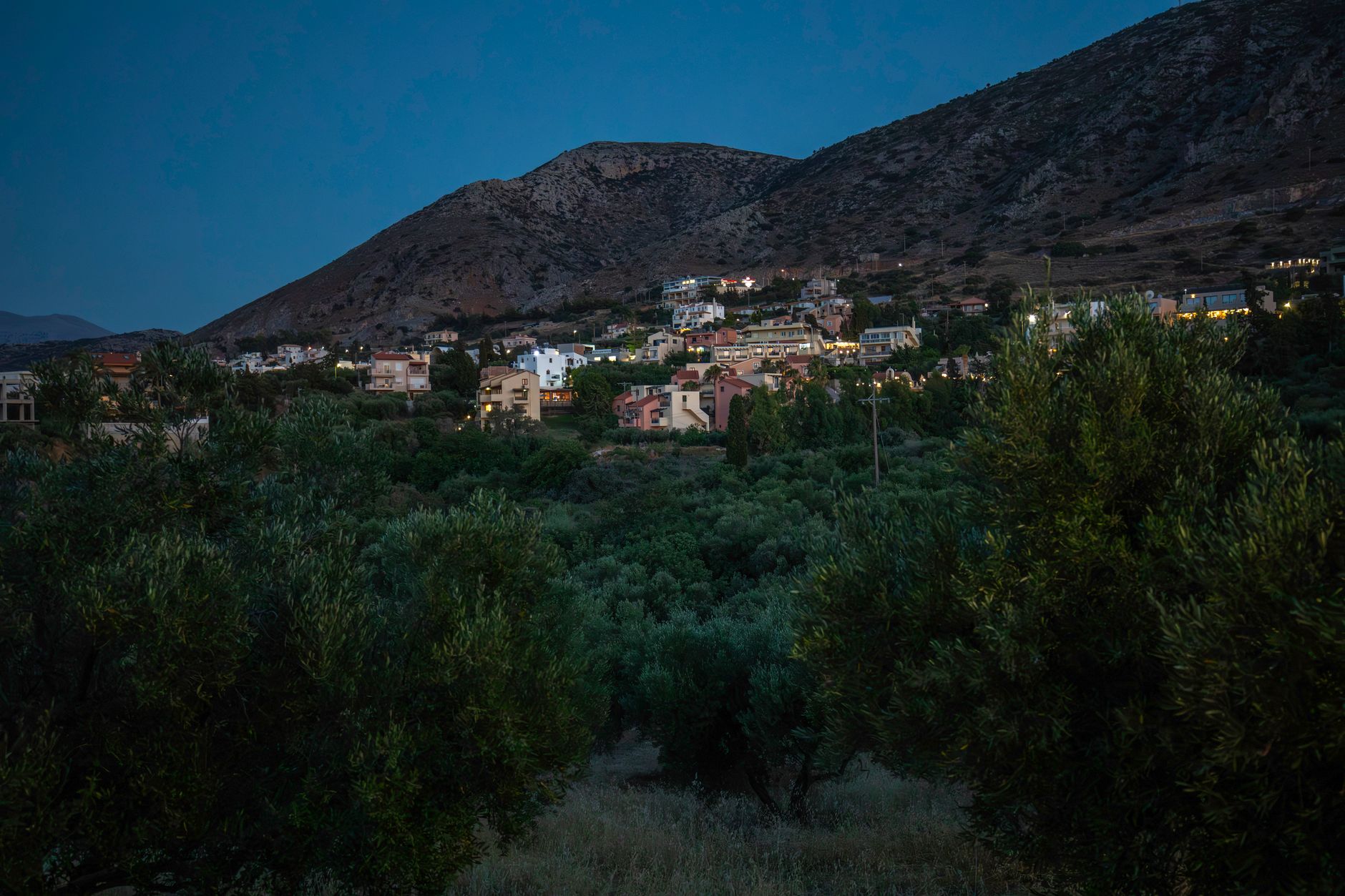
Since Greek law 5170/2025 came into force, every property owner holding an AMA license in Greece faces a strict limit: 60 nights of short-term rental per year on platforms like Airbnb. For property investors in eastern Crete, this rule fundamentally changes the profitability calculation — and requires a rethink of the entire rental strategy. Here is what you need to know to stay compliant and maximize your income within this legal framework.
The 60-Day Rule for Airbnb in Crete: Definition
Where does this limitation come from?
The 60-night cap is embedded in Greek law 5170/2025, which overhauled the short-term rental framework. The law makes the AMA license mandatory for any listing on a digital platform, sets stricter safety standards, and introduces an annual cap on rentable nights. The stated objective: curb the pressure of tourist rentals on the residential market in high-demand areas, particularly in Crete — Greece's most visited island.
Who is affected (AMA license holders)?
The 60-day limit applies to all properties whose owner holds an AMA (short-term rental authorization). This covers any property listed on Airbnb, Booking, Vrbo or any other short-stay platform. Exempt: properties managed by certified tourism accommodation companies under other licensing regimes, and long-term rentals (28+ nights), which do not consume the quota. If you own multiple properties each with their own AMA, the 60-night limit applies per property, not in aggregate.
How Is the 60-Day Count Calculated Exactly?
Precise definition: 60 calendar nights per year
The 60 days refer to 60 nights actually occupied by a guest in a short-term rental (stays under 28 nights). One night equals one unit consumed from your annual quota, regardless of check-in or check-out time. Blocked calendar nights — for maintenance or personal use — do not consume the quota. Only nights with a paying guest physically present are counted.
Counting period and reset
The count runs on the calendar year: January 1 to December 31. The quota resets automatically on January 1 each year. No rollover is possible: unused nights from 2025 do not add to the 2026 quota. This rule drives precise calendar planning, with strong concentration on the highest-value periods — July-August at €130-140/night in eastern Crete.
Verification by the Greek authorities
Digital platforms like Airbnb are legally required to transmit booking data to the Greek tax authority (AADE). Automated cross-referencing allows authorities to detect overruns instantly. An owner who declares 40 nights while the platform reports 85 bookings will be flagged automatically. Traceability is total — there is no operational grey area.
Financial Impact: What Does This Limit Actually Cost?
Theoretical vs. real profitability
The most common investor mistake: calculating profitability based on 365 days of potential Airbnb occupancy. The reality is different. With the 60-day rule, you have 60 nights for short-term rental and 305 potential days for other rental formats. For a realistic picture including actual costs and fees, the calculation must integrate both revenue streams. See our 2026 Crete investment guide for a complete market view.
| Scenario | Airbnb Nights/Year | Gross Airbnb Revenue | Note |
|---|---|---|---|
| No limit (pre-2025) | 100 nights | ~€10,500 (ADR €105) | No longer possible since law 5170 |
| With 60-night rule (2026) | 60 nights | ~€6,300 (ADR €105) | Strict legal ceiling |
| Optimized mixed strategy | 60 nights high season | ~€7,500 (ADR €125) | 60 nights peak + long-term supplement |
Worked example: 4-bedroom villa in eastern Crete
Take a 4-bedroom, 150 m² villa in eastern Crete. Acquisition value: €300,000 (€2,000/m²). Annual ENFIA property tax: €840 (0.28%). With 60 optimized nights: 20 nights in July-August at €140 = €2,800; 25 nights in June/September at €110 = €2,750; 15 nights in May/October at €85 = €1,275. Total gross Airbnb income: €6,825 over 60 nights. This is the annual ceiling for this revenue stream. The remaining 305 days are available for other rental formats depending on your strategy.
Before and after law 5170: a direct comparison
Before law 5170/2025, an active owner could rent 90 to 120 nights per year on Airbnb. At 100 nights with an average ADR of €105, that represented €10,500 gross. The 60-night cap implies a potential loss of €4,200 gross if no alternative is implemented. The challenge is not to absorb this limitation, but to design a strategy that replaces this revenue stream with long-term rental income. See our detailed analysis of Airbnb profitability in Crete 2026.
How to Legally Work Around the 60-Day Rule
Strategy 1: Mix short-term (60 nights) + long-term rentals
The most widespread and effective approach: concentrate your 60 Airbnb nights on the highest-value periods (July-August at €130-140/night), then switch to long-term rentals (28+ nights) for the rest of the year. These long stays do not consume your short-term quota and benefit from a more favorable tax regime in Greece. A monthly rental from May to June and another from October to November naturally complements the Airbnb season without any legal friction — and delivers revenue across all 305 remaining days.
Strategy 2: Airbnb Long Stays for the remaining period
Airbnb offers a dedicated option for stays of 28 nights or more — Long Stays. These bookings do not consume the 60-night quota and allow you to stay on the same platform with the same visibility and management tools. It is a practical solution for owners accustomed to the Airbnb interface: manage two segments from a single account by configuring your calendar to automatically switch to this mode once your short-term quota is exhausted.
Strategy 3: Optimize the calendar with strategic closures
Some owners choose to concentrate all 60 nights exclusively on the peak season (mid-June to mid-September), closing the property for the rest of the year or occupying it personally. This approach simplifies management and maximizes revenue per night. At 60 nights averaging €120 ADR in high season: €7,200 gross with minimal off-season management effort and reduced property wear.
Short-Term vs Long-Term: Tax Differences
Tax rates by rental type
In Greece, both short-term (Airbnb) and long-term rental income are subject to the same progressive tax scale under Greek law 5246/2025, but with different deduction rules. Long-term rentals generally allow more deductions (maintenance costs, depreciation, management fees), which reduces the net taxable base compared to short-term income.
| Rental Income Bracket | Greek Tax Rate |
|---|---|
| €0 – €12,000 | 15% |
| €12,001 – €24,000 | 25% |
| €24,001 – €35,000 | 35% |
| Above €35,000 | 45% |
Article 20 implications for French taxpayers
For French tax residents owning property in Crete, the 2022 Franco-Greek tax treaty (Article 20) governs the treatment of foreign rental income. These revenues are taxed in Greece first but must be reported in France under the "other income" clause to avoid double taxation. Coordination between the two systems is complex and requires precise tracking. See our complete guide on Franco-Greek tax rules 2026 and the specifics of Article 20 of the 2022 treaty.
Greek tax regime and withholding at source
In Greece, rental income must be declared annually via form E1 (income tax return) and form E2 (rental income summary). Filing is mandatory even if the resulting tax liability is zero. Platforms like Airbnb transmit data directly to AADE. There is no automatic withholding at source: the owner calculates and pays tax at annual filing, before June 30 of year N+1.
5 Case Studies: Real Investor Scenarios
The 100% short-term Airbnb investor
Profile: owner of a 2-bedroom apartment in Agios Nikolaos, 100% dedicated to Airbnb. Before 2025, he rented 90 nights/year at an average €95: €8,550 gross. With the 60-night cap and no strategy adjustment, income drops to €5,700. Solution: concentrate those 60 nights on July-August (ADR €130) and shift to monthly rentals in May-June and September. Result: Airbnb income raised to €7,800 over 60 optimized nights — near-equivalent revenue with a simple calendar shift.
The mixed investor (60 nights + seasonal)
Profile: 3-bedroom villa with pool in Sitia. Strategy: 60 Airbnb nights in high season (July-September), then monthly rentals from October to April targeting expat workers or digital nomads. The 60 nights generate €6,000-8,400 gross (ADR €100-140). Long-term rentals provide steady income through the low season. Fiscally, both flows aggregate for Greek tax calculation, but the long-term regime typically allows more deductions on actual costs.
The multi-property manager
Profile: investor holding 4 properties in eastern Crete, each with its own AMA. The 60-night limit applies per property: 4 × 60 = 240 Airbnb nights/year in total. Managing four properties simultaneously requires strict quota tracking for each unit. Specialized property management services allow owners to centralize this monitoring, optimize calendars, and coordinate short/long-term strategies across an entire portfolio with full per-property transparency.
The Franco-Greek investor in retirement
Profile: French retiree owning a house in Crete, occupying it personally for 2 months each summer and renting it the rest of the time. Personal occupancy nights do not count toward the quota. He retains his 60 Airbnb nights for peak season. Tax-wise, he declares rental income in Greece (E1/E2 forms) and reports it in France via Article 20 of the 2022 treaty. Dual compliance is mandatory — a missed French filing can trigger significant back-tax penalties.
Legal Pitfalls and Compliance Requirements
Exceeding 60 nights: fiscal and legal consequences
Exceeding the 60-night quota without an adapted license exposes the owner to significant sanctions. Greek authorities can revoke the AMA license, impose fines proportional to non-compliant revenues, and trigger a tax audit covering all income generated. The platform itself may suspend the account if authorities flag a violation. Losing the AMA license is often more costly than the fine — it blocks all future short-term rental activity until reinstatement.
Documentation and traceability requirements
- Keep all rental contracts (short and long stays) for a minimum of 5 years
- Archive Airbnb payment statements and all received bank transfers
- Maintain a register of occupied nights, distinguishing short-term, long-term and personal use
- Keep proof of annual E1 and E2 filings in Greece
- For French tax residents: retain documentation of French foreign income declaration (form 2047)
Reporting to Greece and to France
On the Greek side: annual declaration due before June 30 of year N+1 for year N income. On the French side: foreign income declaration (form 2047) filed simultaneously with the standard income tax return. Failure to coordinate the two declarations is the most common — and most expensive — compliance error. An accountant fluent in both Greek and French tax law is an investment that pays for itself quickly against the risk of a cross-border audit.
Key point: the 60-day rule is not a constraint to be worked around, but a framework to integrate into your investment strategy from the moment of purchase. A property bought at €300,000 in eastern Crete with a well-calibrated short/long-term mixed strategy remains a performing asset — provided you calculate real profitability across all 305 available days, not just the 60 Airbnb nights.
Sources
- Greek law 5170/2025 — short-term rental reform and mandatory AMA license
- Greek law 5246/2025 — rental income tax scale in Greece
- 2022 Franco-Greek tax treaty, Article 20 — other income clause
- AADE (Greek Independent Authority for Public Revenue) — forms E1 and E2
- Airbnb eastern Crete market data — average ADR €80-140/night by season (2024-2025)
Need personalized guidance?
We'll prepare a tailored estimate for your investment project in Crete.
Book a discovery callReady to take action?
Let's talk about your project
15 minutes, no commitment. We listen to your project and tell you exactly how we can help.